
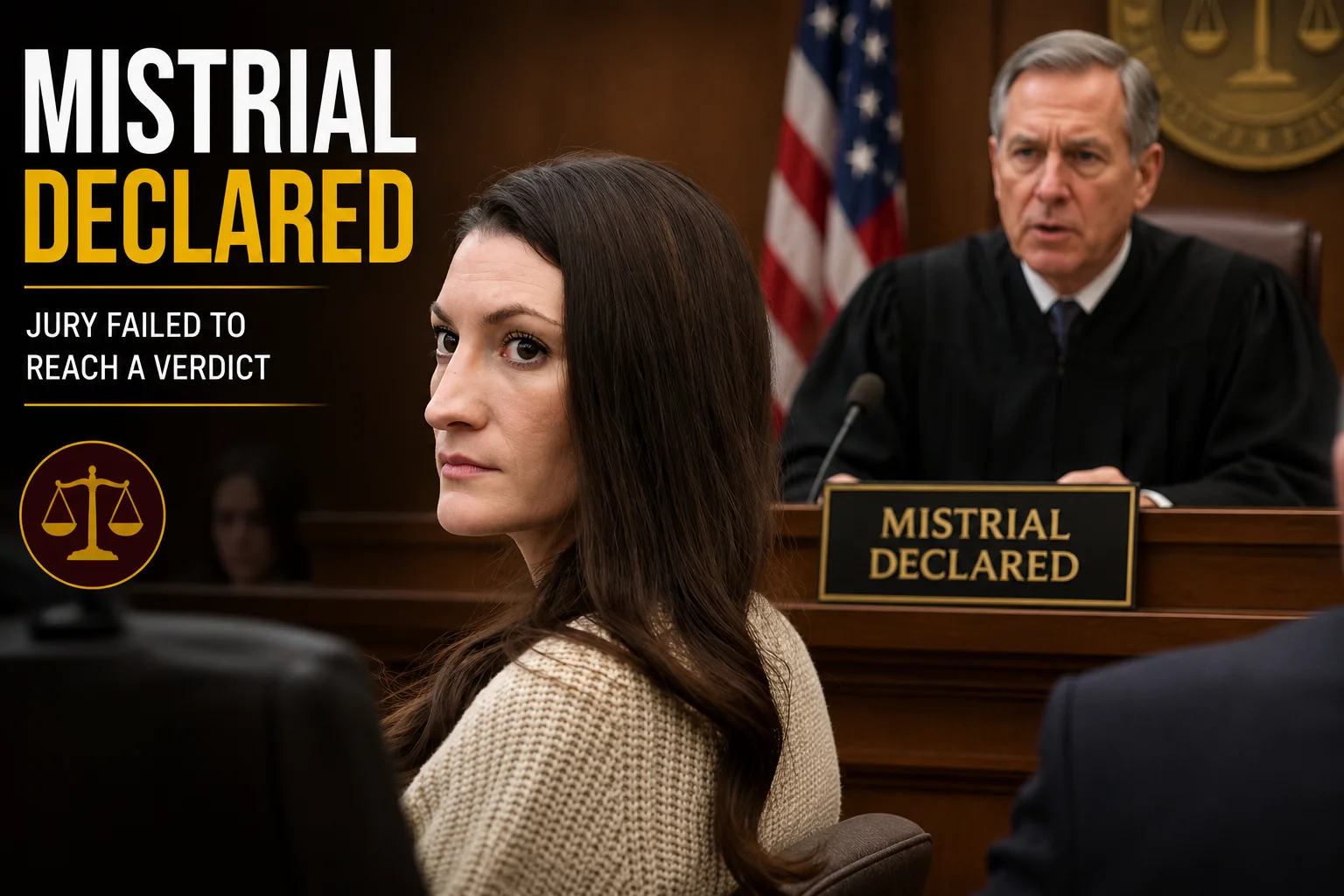
What Does a Mistrial Mean?
If you have been following a major court case, you may have heard the term mistrial and wondered what it actually means. A mistrial occurs when a trial cannot properly continue or a fair verdict cannot be reached under the circumstances.
Importantly, a mistrial does not automatically mean that the defendant has been found guilty or innocent. Instead, the court essentially ends the current trial without a final verdict on the charges.
What Is a Mistrial?
A mistrial is a trial that is terminated before a valid final verdict is reached.
A judge may declare a mistrial when something happens that seriously affects the fairness or integrity of the proceedings. Depending on the circumstances, the case may later be tried again.
The exact rules surrounding mistrials can vary depending on the jurisdiction and the circumstances of the case.
Why Is a Mistrial Declared?
There are several reasons why a judge may declare a mistrial.
Common situations can include:
- A jury cannot reach a unanimous verdict when unanimity is required
- Serious misconduct occurs during the trial
- Important evidence is improperly introduced
- A major legal error affects the proceedings
- A juror becomes unable to continue
- Prejudicial information is presented to the jury
- Other circumstances make a fair trial impossible
A mistrial is generally considered an extraordinary step because courts normally try to allow a trial to reach a valid conclusion.
What Happens After a Mistrial?
What happens next depends on why the mistrial occurred.
In some situations, prosecutors may decide to retry the case with a new trial. A new jury may be selected, and the proceedings can begin again.
In other situations, the case may not be retried.
Therefore, hearing that a court declared a mistrial does not necessarily mean the legal case is over.
Does a Mistrial Mean Someone Is Innocent?
No.
A mistrial is not the same as an acquittal.
An acquittal means the defendant has been found not guilty. A mistrial generally means the original trial ended without a valid final verdict.
This distinction is particularly important when a mistrial occurs because a jury could not reach the required verdict.
Mistrial vs. Hung Jury
The terms mistrial and hung jury are sometimes used together, but they are not exactly the same thing.
A hung jury occurs when jurors cannot reach the required agreement on a verdict after deliberating.
A hung jury can lead the judge to declare a mistrial.
In simple terms:
Hung jury → No required agreement → Mistrial may be declared
However, not every mistrial is caused by a hung jury.
Can a Case Be Retried After a Mistrial?
In many circumstances, a case can be retried after a mistrial, but the answer depends on the reason the mistrial occurred and the applicable law.
For example, when a mistrial results from a genuinely deadlocked jury, a retrial may generally be possible.
However, legal protections such as double jeopardy can affect whether prosecutors are allowed to try the defendant again. The rules can be complicated and depend on the circumstances.
What Happens to the Defendant?
A mistrial does not by itself establish guilt or innocence.
If the defendant is facing criminal charges, the prosecution may potentially continue the case through another trial if legally permitted.
The defendant’s legal situation therefore depends on the reason for the mistrial, the judge’s ruling, and the applicable law.
Why Mistrials Make Headlines
Mistrials often attract significant public attention when they happen in high-profile criminal cases.
People may immediately ask:
- Does the defendant walk free?
- Will there be another trial?
- Does the prosecution have to drop the charges?
- Was the defendant found innocent?
- What happens to the jury?
The answers depend heavily on the circumstances surrounding the mistrial.
A Simple Example of a Mistrial
Imagine a criminal trial is underway and the jury is required to reach a unanimous verdict.
After extensive deliberations, the jurors remain divided and cannot reach the required agreement.
The judge may declare a mistrial because the jury is deadlocked.
The prosecution could potentially request another trial, subject to the applicable law.
This means the original trial has ended, but the overall legal matter may continue.
Why Understanding Mistrial Matters
Understanding the term is especially useful when following breaking court news.
A headline saying “judge declares mistrial” does not mean the defendant won the case, and it does not necessarily mean prosecutors lost their opportunity to pursue the charges.
Instead, it means the current trial ended without a valid final verdict.
Final Thoughts
So, what does a mistrial mean? Simply put, a mistrial occurs when a trial ends without a valid final verdict because circumstances prevent the proceedings from reaching a proper conclusion.
A mistrial can happen because of a hung jury, serious misconduct, legal errors, or other circumstances that make a fair trial impossible. Depending on the situation and applicable law, the case may be retried.
That is why a mistrial should not automatically be interpreted as either a conviction or an acquittal.
👉 Premium Jackets Here